
10GB/Day
1 day
$12.22
We use cookies to make our site work and, with your consent, to measure performance and personalise content. Essential cookies are always on. You can change your preferences at any time.

Instant eSIM · No roaming bills
Browse and compare eSIM data plans for Vietnam
An eSIM for Vietnam is a digital SIM you install by scanning a QR code, no physical SIM required. eSIM.site compares 25 Vietnam data plans from 2 providers, starting at $2.02. Plans activate instantly, connect to local networks with no roaming fees, and can be installed before you travel and switched on the moment you arrive. Use the plan comparison table below to sort all 25 plans side by side by price, data allowance, validity, or price per GB.
Most Vietnam eSIM plans are data-only, so your regular phone number stays active on your physical SIM card for calls and texts. Install your eSIM over Wi-Fi before you fly, then switch it on when you land. If anything goes wrong, our customer support team is ready to help before, during and after your trip.
| Buy | |||||||||
|---|---|---|---|---|---|---|---|---|---|
|
10GB/Day
Local eSIM · 3G/4G/5G
Best value
|
10 GB | 1 days | — | — | 3G/4G/5G | Yes | $1.22 | $12.22 | Buy |
|
20GB Data 30 Days
Local eSIM · 3G/4G/5G
Best value
|
20 GB | 30 days | — | — | 3G/4G/5G | Yes | $1.10 | $21.99 | Buy |
|
100GB Data 30 Days
Local eSIM · 5G
Best value
|
100 GB | 30 days | — | — | 5G | Yes | $1.19 | $119.12 | Buy |
|
100MB Data 7 Days
Local eSIM · 3G/4G/5G
|
100 MB | 7 days | — | — | 3G/4G/5G | Yes | $20.68 | $2.02 | Buy |
|
1GB Data 7 Days
Local eSIM · 3G/4G/5G
|
1 GB | 7 days | — | — | 3G/4G/5G | Yes | $2.91 | $2.91 | Buy |
|
500MB Data 7 Days
Local eSIM · 3G/4G/5G
|
500 MB | 7 days | — | — | 3G/4G/5G | Yes | $4.67 | $2.28 | Buy |
|
500MB/Day
Local eSIM · 3G/4G
|
500 MB | 1 days | — | — | 3G/4G | — | $4.83 | $2.36 | Buy |
|
1GB/Day
Local eSIM · 3G/4G/5G
|
1 GB | 1 days | — | — | 3G/4G/5G | Yes | $2.83 | $2.83 | Buy |
|
2GB/Day
Local eSIM · 3G/4G/5G
|
2 GB | 1 days | — | — | 3G/4G/5G | Yes | $2.07 | $4.13 | Buy |
|
Unlimited Data 1 Day
Local eSIM · 5G
|
Unlimited | 1 days | — | — | 5G | Yes | — | $4.98 | Buy |
|
3GB/Day
Local eSIM · 3G/4G/5G
|
3 GB | 1 days | — | — | 3G/4G/5G | Yes | $1.70 | $5.10 | Buy |
|
3GB Data 15 Days
Local eSIM · 3G/4G
|
3 GB | 15 days | — | — | 3G/4G | Yes | $1.73 | $5.20 | Buy |
|
3GB Data 30 Days
Local eSIM · 3G/4G/5G
|
3 GB | 30 days | — | — | 3G/4G/5G | Yes | $1.81 | $5.42 | Buy |
|
2GB Data 15 Days
Local eSIM · 5G
|
2 GB | 15 days | — | — | 5G | Yes | $3.27 | $6.54 | Buy |
|
5GB/Day
Local eSIM · 3G/4G/5G
|
5 GB | 1 days | — | — | 3G/4G/5G | Yes | $1.31 | $6.56 | Buy |
|
5GB Data 30 Days
Local eSIM · 3G/4G/5G
|
5 GB | 30 days | — | — | 3G/4G/5G | Yes | $1.53 | $7.64 | Buy |
|
Unlimited Data 3 Days
Local eSIM · 5G
|
Unlimited | 3 days | — | — | 5G | Yes | — | $9.44 | Buy |
|
10GB Data 30 Days
Local eSIM · 3G/4G/5G
|
10 GB | 30 days | — | — | 3G/4G/5G | Yes | $1.27 | $12.68 | Buy |
|
Unlimited Data 5 Days
Local eSIM · 5G
|
Unlimited | 5 days | — | — | 5G | Yes | — | $13.91 | Buy |
|
Unlimited Data 7 Days
Local eSIM · 5G
|
Unlimited | 7 days | — | — | 5G | Yes | — | $18.36 | Buy |
|
Unlimited Data 10 Days
Local eSIM · 5G
|
Unlimited | 10 days | — | — | 5G | Yes | — | $25.07 | Buy |
|
Unlimited Data 15 Days
Local eSIM · 5G
|
Unlimited | 15 days | — | — | 5G | Yes | — | $36.21 | Buy |
|
50GB Data 30 Days
Local eSIM · 5G
|
50 GB | 30 days | — | — | 5G | Yes | $1.37 | $68.28 | Buy |
|
Unlimited Data 30 Days
Local eSIM · 5G
|
Unlimited | 30 days | — | — | 5G | Yes | — | $69.69 | Buy |
|
50GB Data 180 Days
Local eSIM · 3G/4G/5G
|
50 GB | 180 days | — | — | 3G/4G/5G | Yes | $1.45 | $72.28 | Buy |
Swipe the table sideways to see every column.
Live prices, last checked .
Multi-country plans that include Vietnam: one eSIM, many destinations.
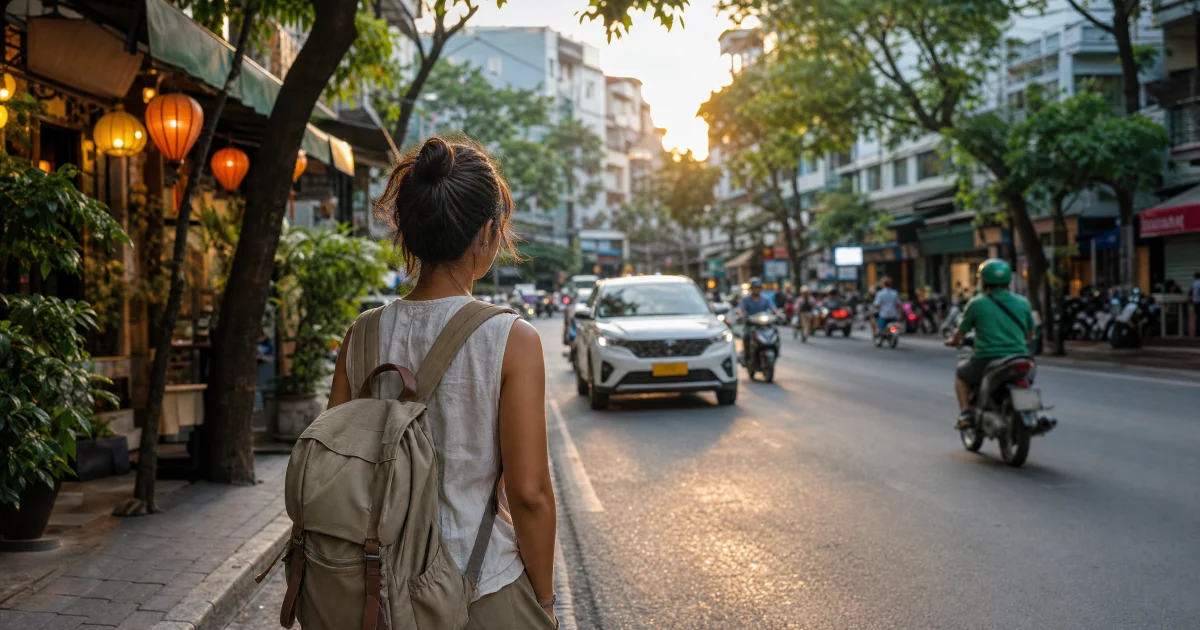
Grab Vietnam's tourist guidance says visitors do not need a local number to register. Here is how a data-only eSIM fits in and how to prepare your airport ride.
Read more →

Island-hopping Thailand, Vietnam, Malaysia, Singapore and Indonesia? Here's whether a regional eSIM or separate country plans actually saves you money in 2026.
Read more →
1. Choose a Plan
Compare plans from multiple providers and pick the best one for your trip.
2. Install via QR Code
Scan the QR code from your email or account dashboard to install instantly.
3. Connect on Arrival
Turn on your eSIM when you land. Get online in seconds with no roaming fees.
Apple
iPhone 18 Pro Max, iPhone 18 Pro, iPhone Duo, iPhone Air, iPhone 17 Pro Max, iPhone 17 Pro, iPhone 17, iPhone 17e
Samsung
Galaxy S26 Ultra, Galaxy S26+, Galaxy S26 FE, Galaxy S26, Galaxy S25 Ultra, Galaxy S25 Slim, Galaxy S25 Edge, Galaxy S25+
Pixel 11 Pro XL, Pixel 11 Pro Fold, Pixel 11 Pro, Pixel 11, Pixel 10 Pro XL, Pixel 10 Pro Fold, Pixel 10 Pro, Pixel 10a

Vietnam draws travelers with its coastline stretching over 3,000 kilometers, terraced rice fields in the northern highlands, and street food culture built around pho, banh mi and roadside coffee.
Most visitors spend 10 to 21 days moving between Hanoi, Ho Chi Minh City and the coast, which means crossing several regional networks, booking domestic flights or trains, and relying on ride-hailing apps daily.
A working data connection from the moment you land matters here because addresses are often unmarked, traffic is dense and negotiated, and QR-code payments and menus are now standard in cities. A Vietnam eSIM solves this before you even reach immigration.
| Capital | Hanoi |
| Currency | Vietnamese dong (VND) |
| Official language | Vietnamese |
| Plug type | Types A, C and G (varies by building), 220V |
| Driving side | Right |
| Dialling code | +84 |
| Time zone | ICT, UTC+7 (no daylight saving) |
The capital's Old Quarter is a maze of motorbikes, egg coffee shops and colonial architecture around Hoan Kiem Lake. Spend 2 to 3 days here, including a day trip to Ninh Binh's limestone karsts.
UNESCO-listed limestone islands rising from emerald water, best seen on an overnight boat cruise. One to two nights is standard, booked in advance through your hotel or an app like Klook.
A lantern-lit ancient town with tailors, riverside cafes and An Bang Beach nearby. Two to three days lets you get clothes made and explore the surrounding countryside by bicycle.
The former imperial capital, home to the Citadel and royal tombs along the Perfume River. One full day is usually enough for the main sites.
Vietnam's commercial engine, with the War Remnants Museum, Ben Thanh Market and a fast-growing rooftop bar scene. Plan 2 to 3 days, plus a side trip to the Cu Chi Tunnels.
Floating markets and canal-side villages south of Saigon, best explored on a one- or two-day boat tour from Can Tho or My Tho.
Da Lat offers a cool-climate escape with waterfalls and coffee farms; Phu Quoc island delivers beach time and snorkeling. Either works well as a 2 to 4 day add-on.
International flights land mainly at Noi Bai Airport (Hanoi), Tan Son Nhat Airport (Ho Chi Minh City) and Da Nang International Airport. Domestically, budget carriers like Vietjet and Bamboo Airways connect major cities quickly and cheaply, while the Reunification Express train line runs the length of the country if you prefer scenery over speed.
Long-distance sleeper buses (booked through apps like Vexere) cover routes trains miss, and open-water ferries link the mainland to islands like Phu Quoc and Cat Ba. Within cities, Grab is the dominant ride-hailing and food delivery app, and it depends entirely on mobile data to find you, price the trip and share your route, which is one of the clearest everyday cases for a Vietnam data plan.
Car hire with a driver is common for day trips; self-driving is rare among visitors due to traffic norms and licensing rules.
Vietnam's climate varies sharply by region, so timing depends on where you're headed. The north (Hanoi, Ha Long Bay, Sapa) is coolest and driest from October to December, while the south (Ho Chi Minh City, Mekong Delta) has a dry season from December to April and a wetter monsoon May through November.
Central Vietnam (Hoi An, Hue, Da Nang) sees its rainy season from September to November, including typhoon risk, so many travelers aim for February to August there instead.
Tet, the Lunar New Year (late January or February depending on the year), shuts down much of the country for several days as families travel home, so book transport and accommodation well ahead if visiting then.
Cash still matters in Vietnam, especially at markets and small eateries, but cards and QR-code payments (via apps like MoMo or bank apps) are widely accepted in cities. ATMs are common in urban areas; notify your home bank before traveling to avoid blocks, and withdraw larger amounts at once since many ATMs charge a flat fee per transaction.
Tipping isn't traditionally expected but is increasingly appreciated for tour guides, drivers and restaurant service, in the range of a modest cash amount rather than a percentage. Vietnam is generally safe for travelers, with petty theft (bag snatching from motorbikes) the main risk in tourist areas, so wear bags across your body and keep phones away from the curb. When visiting temples and pagodas, cover shoulders and knees and remove shoes where indicated.
The national emergency number is 113 for police, 114 for fire and 115 for ambulance.
The major national networks provide strong 4G coverage across Hanoi, Ho Chi Minh City, Da Nang and other cities, with 5G rolling out progressively in urban centers. Coverage thins out in mountainous areas like Sapa's remote trekking routes or on smaller islands, where you may drop to slower data or lose signal entirely between villages.
Hotel and cafe Wi-Fi is generally reliable in cities but inconsistent in rural homestays, which makes independent mobile internet in Vietnam worth having rather than relying on venue Wi-Fi alone.
Most visitors find that an eSIM for Vietnam covers the areas they'll actually spend time in, tourist cities, coastal towns and connecting highways, without needing to think about which local carrier to pick.
A Vietnam eSIM is the practical middle ground between expensive home-network roaming and the hassle of finding a physical SIM after a long flight.
Roaming charges from your home provider can run high per megabyte and often aren't transparent until the bill arrives, while a local SIM card requires finding a shop after landing, showing your passport, and juggling a second phone number you'll never use again.
An eSIM installs before you leave home, activates the moment you land, and keeps your original number active on your primary line for calls and text messages, so you don't miss anything important.
Check two things before buying: that your phone model supports eSIM (most phones from the last few years do) and that it's carrier-unlocked, since a locked phone may block third-party eSIM profiles.
The plans on this page vary by data allowance and validity period, from short weekend trips to full multi-week itineraries, with top-up options if you use more than expected, so you can match the plan to your actual trip length rather than overpaying for unused data.
For typical use, maps, messaging, Grab rides and social media, 3 to 5GB per week covers most travelers comfortably. Heavy streaming or video calls will push that higher, so check the plan options above for larger allowances.
Most eSIM plans support personal hotspot or tethering, letting you share your connection with a laptop or a second device. Check the specific plan details on this page, as some providers cap tethering speeds or exclude it entirely.
Coverage in mountainous trekking regions is generally weaker than in cities, with gaps in valleys and along winding mountain roads. Download offline maps in advance for these areas rather than relying solely on live data.
Yes, most plans on this page allow top-ups purchased directly through the same account or app once you're close to your limit. This avoids the need to buy a completely new eSIM mid-trip.
Check your phone's settings menu under "Mobile Data" or "Cellular" for an option to add an eSIM, or search your exact model number online. Your phone also needs to be carrier-unlocked for a travel eSIM to work properly.
Last updated: October 15, 2026